Loading...
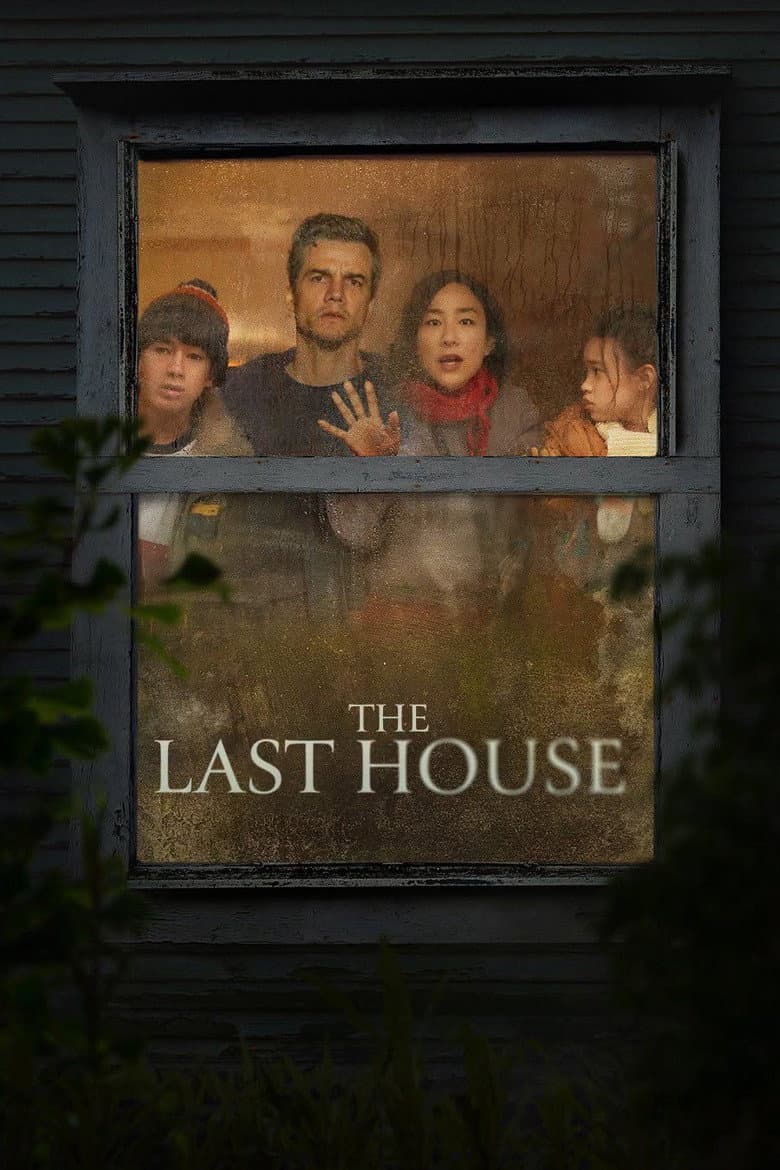
The Last House (2026)
3
Not RecommendedDirected by Louis Leterrier· 110 min· 3 min read
3
The Last House (2026)
Not RecommendedDirected by Louis Leterrier· 110 min· 3 min read
My Review
The Last House is a 2026 science-fiction horror film directed by Louis Leterrier, written by Matthew Robinson, and released on Netflix. It stars Greta Lee and Wagner Moura as the parents of a family of four who find themselves suddenly sealed inside their own home, forced to survive against both their steadily dwindling resources and a mysterious threat lurking outside. Originally developed under the title 11817, it is a film with a genuinely strong central idea, and that is precisely why watching it deflate over 110 minutes is so frustrating.
Let me start with the premise, because it deserves credit. The setup is excellent and immediately gripping: an ordinary family, an ordinary house, and a world outside that has abruptly become lethal. There is enormous potential in that confined, claustrophobic space, and for a good while the film understands what it has. The early stretch, with its slice-of-life texture and slowly tightening dread, is genuinely effective, and I was fully on board.
I do have to raise one personal objection, however, which is that this family appear to be the MacGyvers of suburbia. The ingenuity they display, and the sheer duration of their endurance, is frankly superhuman. I am under no illusions about myself here. I would have folded the moment I could no longer shower, and if you had informed me that I also could not access YouTube, I would have quietly opened the front door and let the situation resolve itself. More to the point, my own family, sealed in one house with no exit and no distractions, would have turned on each other long before this film reached its final act. Not from malice, simply from proximity. The film asks you to accept a level of familial cooperation that strains credulity harder than anything else in it.
My real criticism, though, is structural. The Last House is all build-up. It gestures repeatedly at bigger ideas, seeds implications, and quietly assures you that everything is heading somewhere significant, and then a substantial portion of that simply never materialises. Threads that feel like they are being carefully laid in the first half turn out to be going nowhere in particular. The film sets the table beautifully and then serves you toast. By the closing stretch, its themes are being spoken aloud in dialogue rather than delivered through story, which is always a sign that something has come loose in the writing, and the finale devolves into a lot of motion without much meaning.
It is also simply too long. At 110 minutes, this needed either a significantly tighter cut or considerably more happening inside its runtime. Leterrier is a filmmaker best known for large-scale, high-octane action, and I suspect the patience required for a single-location chamber piece was never quite the right fit. Compact the story, or make what is there more compelling. I will confess, without pride, that I found myself checking the clock more than once, and when a survival thriller has you monitoring the time, the tension has evaporated.
Do you agree with this review?
Sign in to add this to your watchlist, mark it seen, and save your own rating.
Reviewed on August 7, 2026
Share: