Loading...
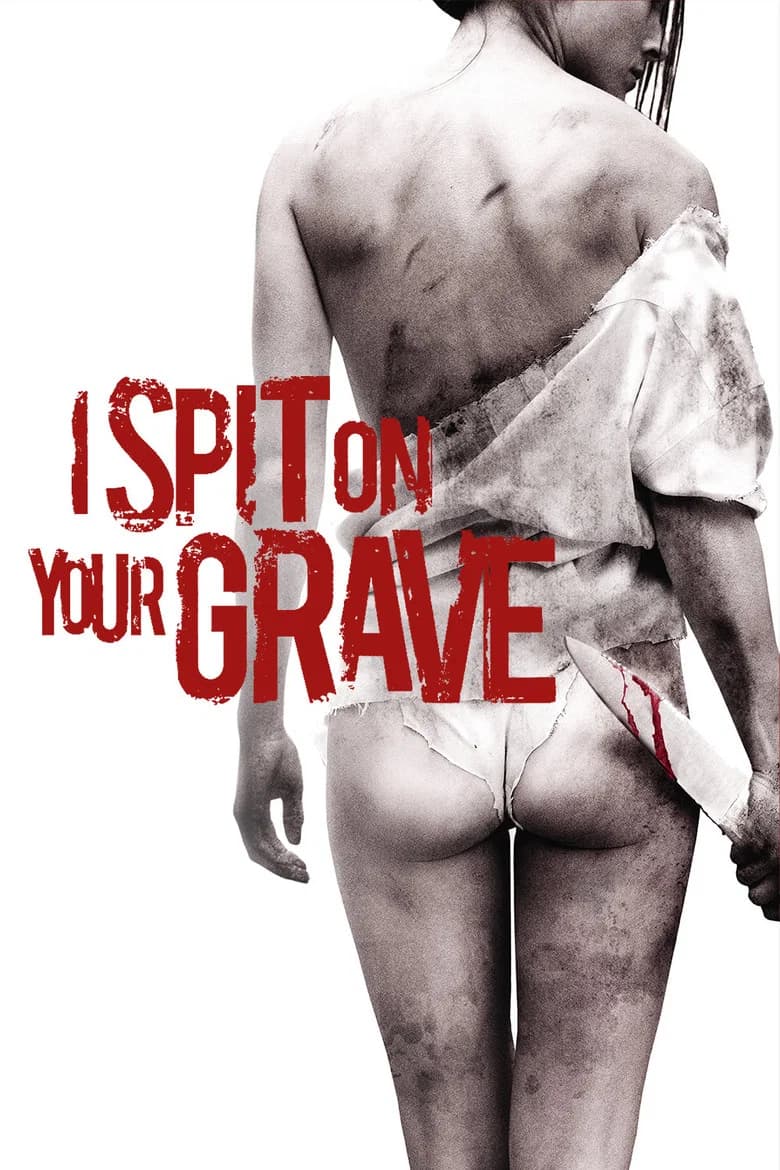
I Spit on Your Grave (2010)
2
Not RecommendedDirected by Steven R. Monroe· 108 min· 5 min read
My Review
I Spit on Your Grave is a 2010 rape-revenge horror directed by Steven R. Monroe, written by Stuart Morse from Meir Zarchi's screenplay for the 1978 original, and starring Sarah Butler as Jennifer Hills. It runs 108 minutes, was made for two million dollars, took around five hundred and seventy thousand at the box office, and was shot in and around Shreveport, Louisiana. I found it a deeply uncomfortable watch, and I want to be precise about which parts of that discomfort the film earned and which parts it simply inflicted.
Let me split this into two, because it is functionally two different films with a hinge in the middle.
The first half is, to my genuine surprise, competently made. The cinematography is decent, the sense of isolation is real, and the suspense is constructed with some actual craft. It builds dread properly rather than cheaply, and by the time things turn, the atmosphere has done its work.
But the reason it lands is not the filmmaking. It is the subject. As a man, I have never once in my life worried about being alone in a cabin in the woods. It has not crossed my mind. That thought has never occupied a single second of my attention. And for an enormous number of women, that exact scenario sits somewhere near the front of the brain permanently, as an instinctive calculation made by default, because of the world we have collectively built. Watching a film that is constructed entirely on top of a fear I have never had to carry is an uncomfortable experience, and I do not think it should be a comfortable one.
Then the assault happens, and it is simply bad. I am not going to describe it, I am not going to catalogue it, and I do not believe there is any value in my doing so.
The second half is where this collapses entirely.
Jennifer survives in the woods. The same woods that these men are actively combing through, day after day, searching for her body. She is out there for roughly a month, and the film turns her into something closer to a forest spirit than a person, materialising and vanishing at will. Critics at the time noted the same thing, describing her as becoming almost supernatural in that stretch, and while I can see the intent, the effect is that the film stops being grounded in anything.
Then there is the physical implausibility, which broke the entire back half for me. Jennifer begins incapacitating grown men and moving them into elaborate, purpose-built torture arrangements. And without wishing to be unkind, Sarah Butler is a small woman. There is no reading of physics in which she is single-handedly dragging fully grown men across forest terrain and suspending them from structures. Every time it occurred, I fell further out of the film, and by the end I was watching a series of set pieces rather than a story.
Do you agree with this review?
Sign in to add this to your watchlist, mark it seen, and save your own rating.
Reviewed on September 20, 2026
Share: