Loading...
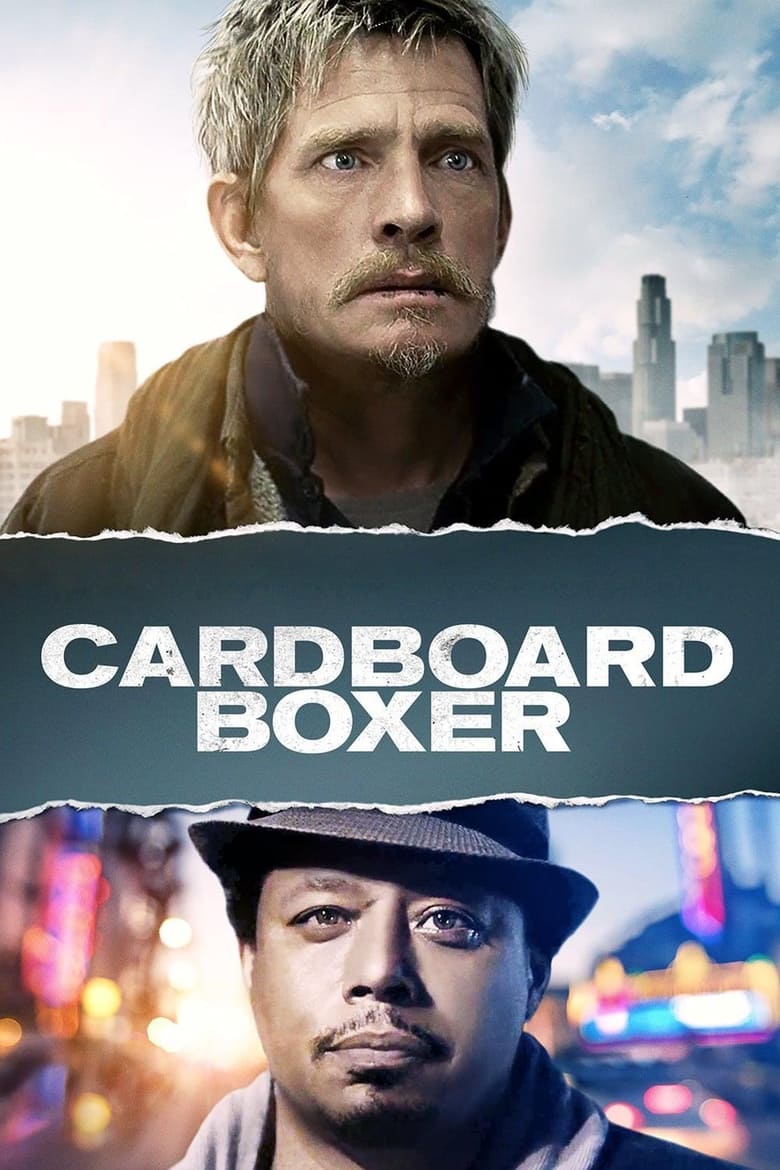
Cardboard Boxer (2016)
5
RecommendedDirected by Knate Gwaltney· 88 min· 5 min read
5
Cardboard Boxer (2016)
RecommendedDirected by Knate Gwaltney· 88 min· 5 min read
Gentle and broken, a homeless man fights others on video for money but soon finds comfort in an unlikely friend and the lost diary of a young girl.
My Review
Cardboard Boxer is a 2016 drama written and directed by Knate Lee, running 88 minutes. Thomas Haden Church stars as Willie, a homeless man living on Skid Row in Los Angeles, alongside Terrence Howard as Pope, a cab driver known for looking after the homeless community, and Boyd Holbrook and Rhys Wakefield as the two wealthy young men who begin paying Willie fifty dollars a time to fight other homeless men while they film it. Separately, Willie finds a burnt diary in the rubbish, written by a young girl who has lost her mother and is living with an abusive uncle, and begins writing replies she will never read.
The film came to my house through my wife, who saw clips of it circulating on TikTok, decided they looked devastating enough that she wanted the whole thing, and then spent the remainder of the evening holding me personally responsible for how sad it was. I want it noted that I did not select this film. I was merely in the room.
What it takes on is genuinely painful material, and material that anybody fortunate enough never to have experienced it tends to quietly pretend is not really there. Homelessness is the sort of subject that most films either sentimentalise beyond recognition or use as set dressing, and this at least attempts to sit inside it.
Church is the reason it works at all. His performance conveys the physical, mental and emotional weight of that life simultaneously, without ever reaching for the obvious. He shows you the constant loss of friends and companions, the abuse arriving from every direction, and the particular indignity of having the handful of things you actually own taken from you by anybody who feels like it, at any moment, with no consequence whatsoever. There are small touches that land hard, including Willie teaching himself cursive from spelling cards so that he can write back to a girl who does not know he exists, and folding those replies into paper planes and throwing them off a rooftop. At one point he says simply that he does not want to be alone when he dies.
The element that sat heaviest with me is the fighting. For anyone old enough to remember, this material lands directly on the street fight videos that circulated in the early two thousands, in which people filmed homeless men brawling for money and then sold the footage. That is not an accidental resemblance. The screenplay was explicitly drawn from that real-world phenomenon, and the people who produced those videos ultimately faced criminal charges. The Hollywood Reporter named the connection directly in its review at the time.
Do you agree with this review?
Sign in to add this to your watchlist, mark it seen, and save your own rating.
Reviewed on September 12, 2026
Share: