Loading...
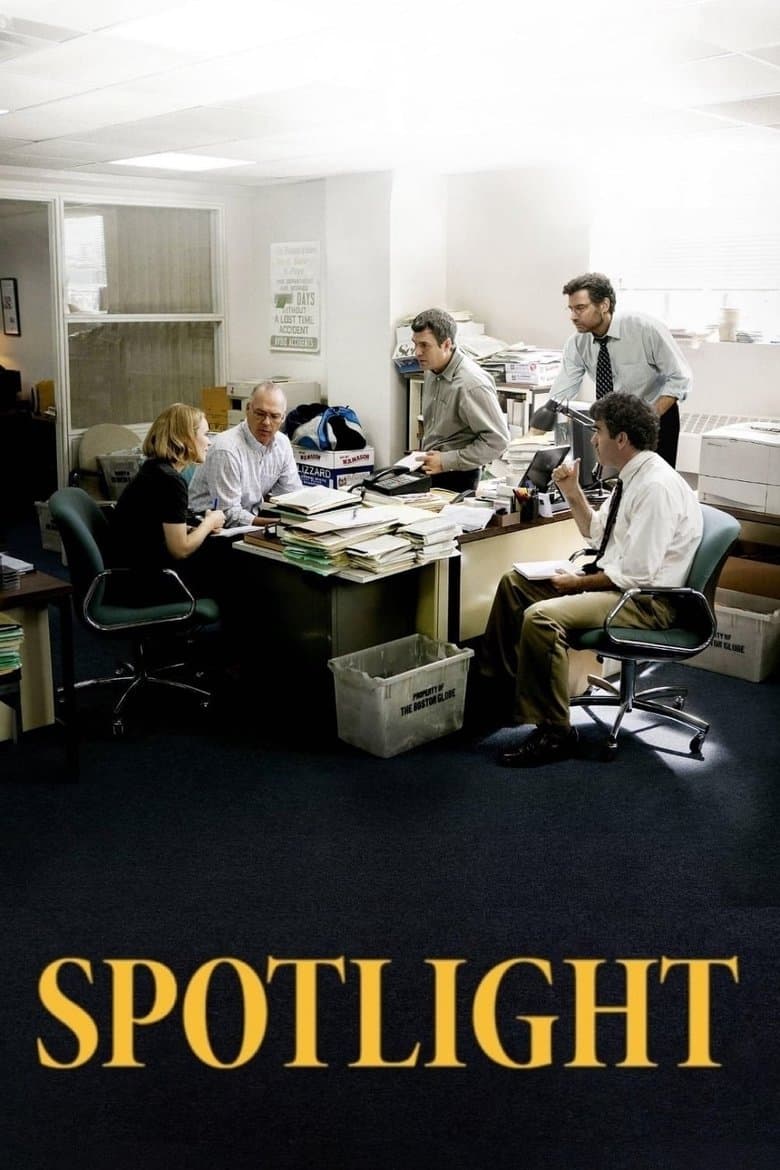
Spotlight (2015)
10
RecommendedDirected by Tom McCarthy· 129 min· 4 min read
My Review
Spotlight is the 2015 drama directed by Tom McCarthy, winner of the Academy Award for Best Picture and Best Original Screenplay. It follows the Boston Globe's "Spotlight" investigative team as they uncover the systematic sexual abuse of children by Catholic priests in Boston, and the decades-long effort by the Church to conceal it. The ensemble includes Michael Keaton, Mark Ruffalo, Rachel McAdams, Liev Schreiber, and Stanley Tucci, and the film is based on the real, Pulitzer Prize-winning reporting that broke the story in 2002. This film left me carrying several kinds of anger at once: profound sadness for the victims, fury toward the people who harmed them, and a colder, quieter anger toward everyone who knew and chose silence.
Let me begin with the performances, because there is not a single weak link across the entire cast. At no point was I pulled out of these characters or the grim, methodical road they walk to bring this story into the light. What is remarkable is how restrained the acting is. Nobody grandstands. The film trusts its actors to be quiet, human, and real, and that trust is repaid in a set of performances that feel less like performances than like people doing difficult, necessary work. It's an ensemble in the truest sense, and it's flawless.
That restraint is central to why the film hits as hard as it does. Spotlight never dramatizes the abuse itself, never reaches for a swelling score to tell you how to feel, never manipulates. It is a still, procedural film about reporters making phone calls, knocking on doors, and reading documents, and that stillness is precisely what makes the horror underneath it land with such force. The film is furious, but its fury is controlled, and that control is devastating.
And what elevates it beyond any work of fiction is that it is true. This happened. To a degree, all of these people were real, the victims most of all. That knowledge reframes every scene. There is a moment where a former priest, questioned at his door, calmly justifies what he did on the grounds that he never raped anyone, and claims he would know the difference because he himself was raped as a child. There is the institutional cover-up, defended by people who had somehow convinced themselves their reasons were justified. There are the appeals to not erase all the good these men had done over a handful of bad apples. And there are the lawyers who defended the indefensible because it was, in their words, simply their job. Every one of those excuses is as weak as the spine it takes to hide behind it.
Do you agree with this review?
Sign in to add this to your watchlist, mark it seen, and save your own rating.
Reviewed on July 2, 2026
Share: