Loading...
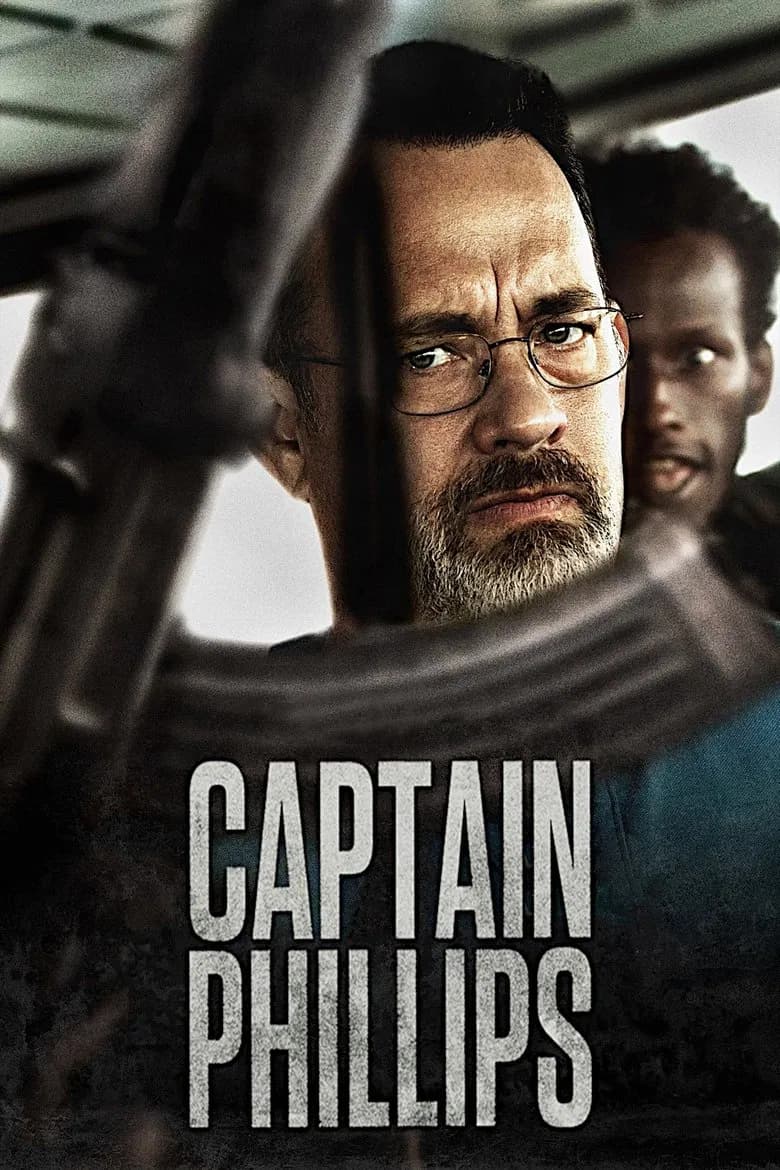
Captain Phillips (2013)
7
RecommendedDirected by Paul Greengrass· 134 min· 4 min read
My Review
Captain Phillips is a 2013 biographical thriller directed by Paul Greengrass, written by Billy Ray, and adapted from A Captain’s Duty, the book by Richard Phillips and Stephan Talty. It runs 134 minutes and stars Tom Hanks as Phillips and Barkhad Abdi as Abduwali Muse, the leader of the Somali pirates who hijacked the MV Maersk Alabama in 2009, the first American cargo ship to be taken in two hundred years.
This was a really interesting film. And as is the case with most based-on-a-true-story productions, the question that sat with me throughout was how much of it had been stretched. What is fiction here and what is truth. I did no research while watching, so I took the entire thing at face value as it played.
Then I went and looked, and it turns out a considerable number of people have extremely strong views about this film.
Eleven members of the Maersk Alabama’s crew filed suit against Maersk Line and the Waterman Steamship Corporation, alleging what their lawsuit described as willful, wanton and conscious disregard for their safety. Their attorney, Deborah Walters, stated that the crew had begged Captain Phillips not to take the ship so close to the Somali coastline. Crew member Jimmy Sabga summarised the position bluntly, saying that Phillips did not follow orders, the ship was attacked, and he was responsible. Chief Engineer Mike Perry was among those who spoke publicly about it.
And here is the detail that genuinely stopped me. In a deposition given for that lawsuit in 2012, Phillips admitted that he had read the email warnings. The vessel had been receiving advisories about increased pirate activity in the region, including specific recommendations to move further offshore.
Which matters, because the film handles this very differently. On screen, Phillips’ determination to hold his course is soft-pedalled, and the crew who want him to change it come across as somewhat unreasonable and faintly cowardly. Critics noted this at the time, with one observing that there is a meaningful difference between taking Phillips’ word over the crew’s in areas of genuine uncertainty, and discarding verifiable facts in service of a heroic narrative.
I do want to be fair about where this landed, though. The lawsuit settled before it ever reached trial, in Mobile, Alabama, in December 2013, roughly two months after the film was released. Maersk publicly described the claim as being without foundation, and Phillips has consistently denied negligence. No court ever found against him, and I am certainly not the person qualified to adjudicate it. What I can say is that there is a substantial and well-documented body of disagreement about the version of events this film presents, and the film itself gives you no indication that it exists.
Do you agree with this review?
Sign in to add this to your watchlist, mark it seen, and save your own rating.
Reviewed on October 17, 2026
Share: