Loading...
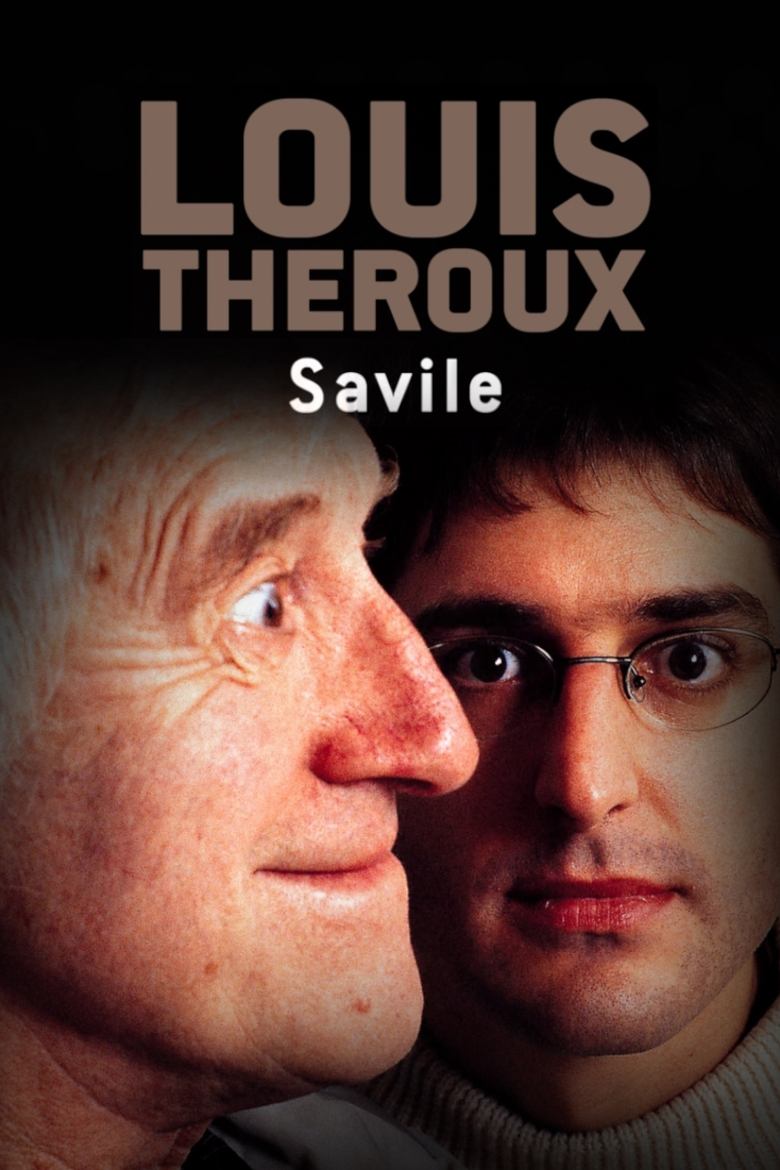
Louis Theroux: Savile (2016)
7
RecommendedDirected by Arthur Cary· 75 min· 5 min read
7
Louis Theroux: Savile (2016)
RecommendedDirected by Arthur Cary· 75 min· 5 min read
Sixteen years after his documentary When Louis Met Jimmy, Theroux seeks to understand how he was tricked by a man who became his friend.
My Review
Louis Theroux: Savile is a 2016 BBC Two documentary directed by Arthur Cary and presented by Louis Theroux, running 75 minutes. It is a return to the subject of Theroux's 2000 film When Louis Met Jimmy, made across roughly two weeks of filming spread over several months in 1999 and 2000, and it exists because of everything that emerged after Jimmy Savile's death in 2011.
I want to be upfront about my own position, because it shapes everything that follows. I did not grow up in the United Kingdom. Jimmy Savile was never a voice in my house or a face on my television, and he was not woven into anybody's childhood that I knew. For most of my adult life he has existed to me as a whisper, a name attached to something terrible happening somewhere else. So I arrived at this with almost no sense of the scale of his fame, his power, or his access.
The context I was missing is this. Savile was not simply a celebrity. He hosted Top of the Pops and Jim'll Fix It, a programme constructed entirely around children. He was one of Britain's most prominent charity fundraisers, with extraordinary access to hospitals and institutions. He was knighted. He was, for decades, treated as a national eccentric and a national treasure. He died in October 2011. In October 2012, an ITV investigation broke the story, and the picture that assembled over the following years was of one of the most prolific sexual predators in British history, with hundreds of victims across decades. The Dame Janet Smith review, published only months before this documentary aired, identified around seventy-two counts of abuse connected to the BBC alone.
Watching from the other side of the world, my assumption had always been that it must have functioned as an open secret. How else does one man sustain that for that long? And this documentary does not really answer that question through revelation. It answers it through institutions. The BBC. The hospitals. The police. It was not a single blind spot, it was a system of them, and each one held.
So what is this film? It is not shocking, and it does not unveil anything the public did not already know by 2016. What it actually is, is a portrait of a man realising that someone he considered a friend was evil, and then working through that in public. It is Louis Theroux arguing with his own conscience.
What makes this so uncomfortable is that Theroux did ask. In the 2000 film he put the rumours directly to Savile, on camera. Savile's answer remains genuinely chilling: he explained that he told people he did not like children in order to keep the tabloids at bay, then added that nobody could know whether he was or was not, that he knew he was not, and that it was a policy which had worked a dream. Theroux got closer than any journalist managed while Savile was alive, and he has said he remains proud of the original film for that reason. It still was not enough, and that is the wound this documentary keeps circling. How did I not see it. I knew there was a secret. I saw the behaviour, the inappropriate remarks, the way he operated. And every time, it settles back onto the same landing point: it was a different era, and only with hindsight is the wrongness obvious.
Do you agree with this review?
Sign in to add this to your watchlist, mark it seen, and save your own rating.
Reviewed on September 6, 2026
Share: