Loading...
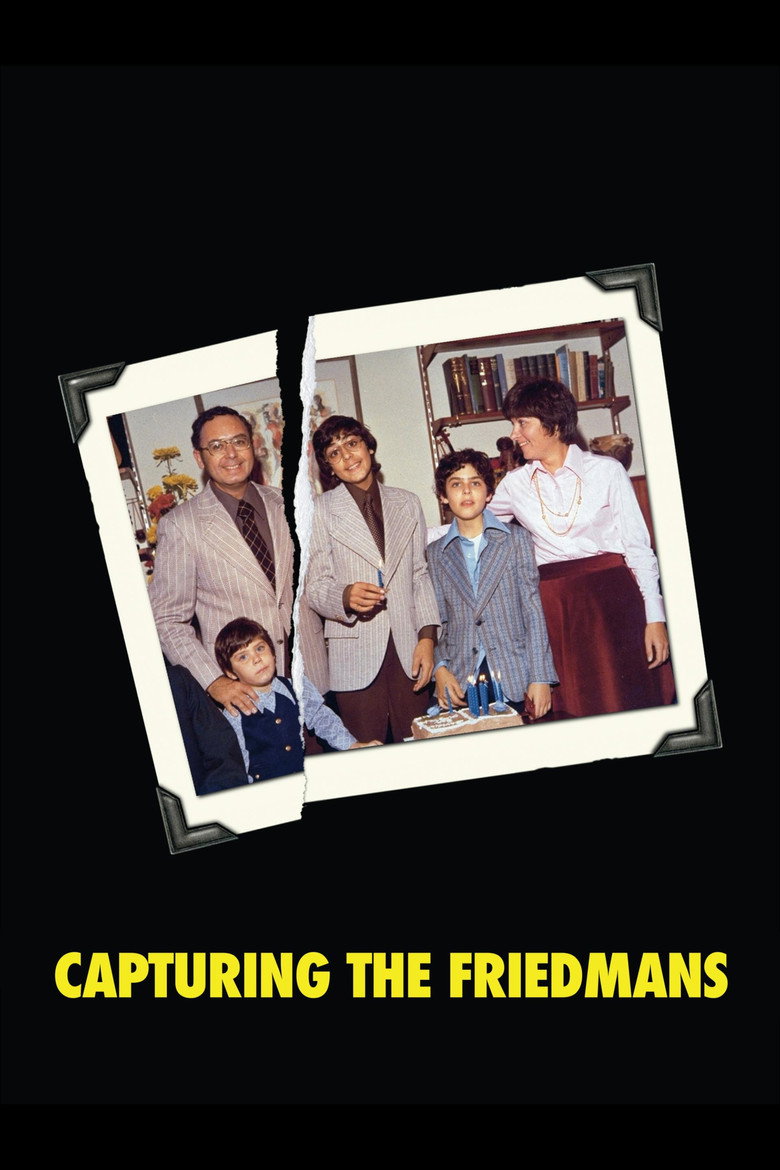
Capturing the Friedmans (2003)
3
Not RecommendedDirected by Andrew Jarecki· 107 min· 5 min read
3
Capturing the Friedmans (2003)
Not RecommendedDirected by Andrew Jarecki· 107 min· 5 min read
An Oscar nominated documentary about a middle-class American family who is torn apart when the father Arnold and son Jesse are accused of sexually abusing numerous children. Director Jarecki interviews people from different sides of this tragic story and raises the question of whether they were rightfully tried when they claim they were innocent and there was never any evidence against them.
My Review
Capturing the Friedmans is a 2003 documentary directed by Andrew Jarecki, produced for HBO Documentary Films and distributed by Magnolia Pictures, running 107 minutes. It concerns the 1987 investigation into Arnold Friedman and his youngest son Jesse, both of whom were charged with the sexual abuse of children in Great Neck, Long Island. It won the Grand Jury Prize for Documentary at Sundance in 2003, was nominated for the Academy Award, and holds a 97 percent approval rating on Rotten Tomatoes. I am going to be honest and say I did not get on with it at all, and I am well aware that puts me a long way from the consensus.
The background first. Over Thanksgiving weekend in 1987, police raided the Friedman family home following a United States Postal Service sting operation, seizing a substantial collection of child sexual abuse material belonging to Arnold, a schoolteacher who ran computer classes for local boys in his basement. Arnold and Jesse were subsequently charged with abusing dozens of those children. Both initially denied everything, and both later pleaded guilty. Arnold admitted to the material and to molesting children, and he died in prison. Jesse served thirteen years, was released in 2001, and has consistently maintained his innocence ever since. I want to keep those two positions distinct, because the film itself raises genuine and serious questions about how the children were interviewed, and Jesse's conviction has been the subject of formal review in the years since.
The film exists at all because of an extraordinary accident. Jarecki was originally making a documentary about children's birthday entertainers in New York. One of his early subjects was Silly Billy, the city's most in-demand birthday clown, whose real name is David Friedman, Arnold's eldest son. David made a series of cryptic remarks about his past, and Jarecki followed them. What he found was that the family had filmed themselves obsessively throughout the raid, the investigation and the trial, with David shooting most of it, leaving behind an archive of a household destroying itself in real time.
And here is where I diverge sharply from most people who watch this. What I actually experienced across those 107 minutes was not a story about truth or justice. It was a story about Elaine Friedman being torn apart by her own children.
Elaine believed her husband was guilty. Her three sons did not, and they closed ranks against her because of it. So the film becomes, in large stretches, an extended record of three young men turning on their mother for reaching the conclusion the evidence supported. It is genuinely difficult to sit through, and it made me angrier than anything else in the film.
Do you agree with this review?
Sign in to add this to your watchlist, mark it seen, and save your own rating.
Reviewed on September 7, 2026
Share: